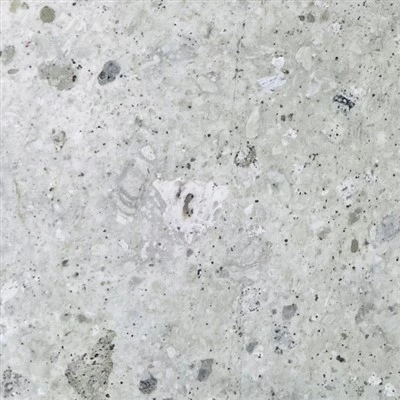
Homeowners looking to renovate their home often want to add gorgeous stone features. When choosing the right stone, many consider aesthetics and practicality, but not the scientific details of each stone. For example, how was your chosen granite formed? Is it invasive or invasive? What minerals are in each color? While knowing the origin of a stone may not seem necessary for a renovation project, it can actually make your new renovation feel even more special when you learn that years of scientific coincidence have come together to create a beautiful material.
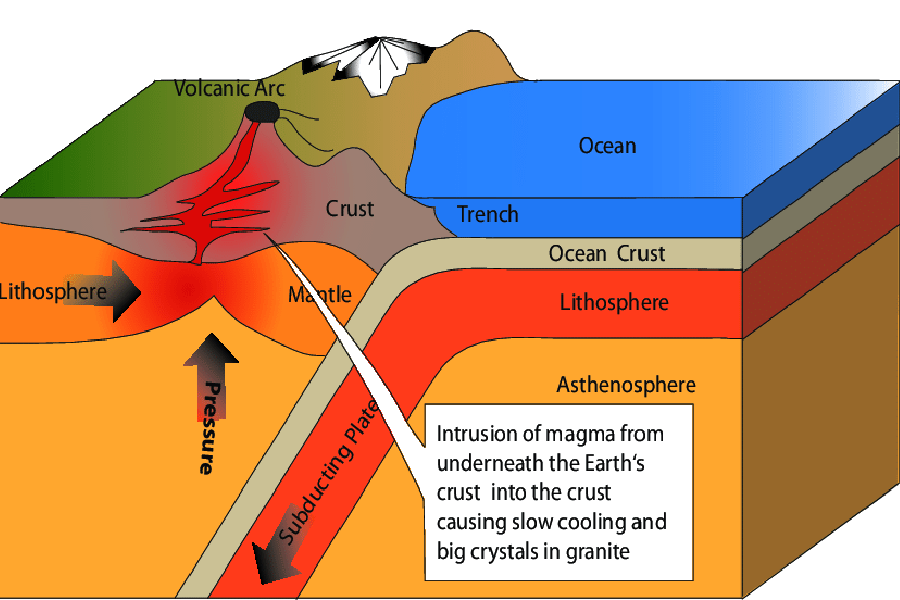
First, let's unpack what the terms intrusive and extrusive rock mean.
Igneous rocks can form in two different ways. In general, igneous rocks are known to form when lava or magma cools. Magma is the lava material below the surface while lava is the lava material above the surface. The location where this process takes place is what makes the igneous rock intrude or erupt.
Extrusive rocks are formed by the cooling of molten magma on the Earth's surface. This rock is also called volcanic rock. During extrusive rock formation, magma is brought to the surface by a volcanic eruption and then solidifies to form rock. These rocks usually have an ultrafine grained or glassy texture. Magma cools faster in the open air or in seawater, so there isn't much time for large minerals to form, so rocks often have extremely small, barely visible deposits of minerals. The process can also make natural glass. A large amount of extrusive rock is called extrusion. Extrusive rocks are mainly distributed at different boundary points, such as the Mid-Atlantic Ridge. Some examples of extrusive rocks include obsidian, basalt, andesite, and pumice.
Intrusive rocks form when magma cools within the Earth's crust. This body of rock, called an intrusion, comes in many forms with specific names such as bedrock, levee, ledge, boulder, and volcanic plug. Intrusive igneous rocks are often characterized by large crystal sizes and individually visible deposits. Some scientists further subdivide intrusive rocks based on crystal size: coarse-grained plutonic rocks, which have smaller deposits, or medium-grained subvolcanic rocks, which have larger deposits. These rocks are usually classified according to the content of each mineral in them. This rock makes up 7% of Earth's current land surface.

So is our granite extruded or intrusive?
Granite is invasive and thus formed by the cooling of silica-rich magma within the Earth's crust.
Visually, granite is a typical intrusive igneous rock, as most plates have distinctly different mineral deposits. In contrast, extrusive rocks generally do not have deposits large enough to be noticeable. Granite and other intrusive igneous rocks often have large mineral patterns that make each slab unique.
Intrusive rocks are mined by using large machinery and explosives. Granite mines are found all over the world, from China to Brazil to Italy. In the United States, there are granite quarries all over the country, most notably North Carolina, Texas, Massachusetts, Indiana, Wisconsin, and Georgia.
Each quarry will have different kinds of minerals in its rock structure, which means that some quarries have certain colors and patterns that are only applicable to that location.
Minerals in Granite
As we said, granite has a variety of different deposits that can be found in its slabs. Let's break down some of the minerals that can be found in granite slabs:
Quartz is one of the main components of granite. A slab should have between 20% and 60% quartz volume in order to be considered true granite. It is a hard, crystalline mineral that usually appears in granite slabs as colorless or milky white.

Feldspar is the second most common mineral component in granite. It can be many different colors, including white, gray, pink, or reddish, but is most commonly a slightly off-white opaque color.
Mica is another common mineral type found in granite. Typically, mica is in the form of muscovite, which is lustrous and colorless, but may also have slight tints of brown, yellow, green, or rose, or biotite, which is usually a black glossy stone. This mineral is usually only found in flakes, stacked on top of each other.
Amphibole minerals (usually amphibole) are also commonly found in granite. They are usually black or dark green.
Conclusion
Granite is a gorgeous and highly durable substance. As an intrusive igneous rock, it started as magma deep in the Earth and then cooled. This rock is mined all over the world. After discovery and excavation, it was turned into a board and traded through companies like ours. Understanding the process of granite creation will help you better appreciate your new remodeling project.