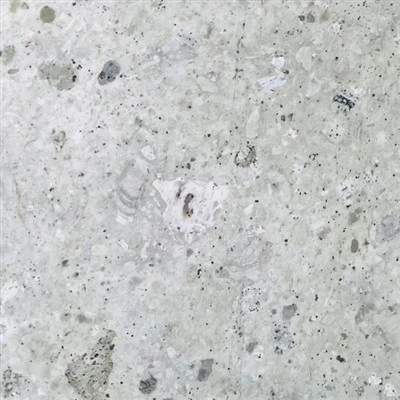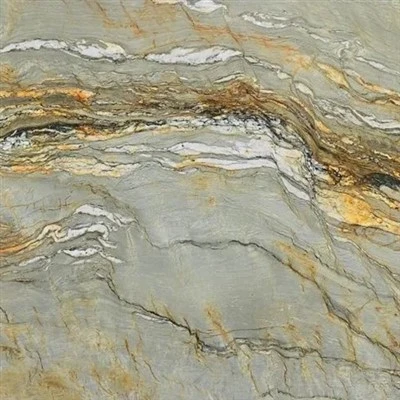
With the continuous development of human civilization, returning to the basics has become the mainstream of the world. Facing stone has gradually become an irreplaceable and popular decorative material in the world today. Granite stone is favored by people because of its hardness, gorgeous colors and variety. , But its mineral composition and structure are more complex; there are many varieties of granite stone in the stone market, colorful, dazzling, and people continue to improve the secondary processing technology of granite stone, dyeing, waxing, etc. to improve The granite color and methods to improve the polished gloss are also being used by many stone manufacturers.
These secondary processed stones cannot withstand the test of time. They will gradually fade and lose their luster, and cannot achieve the decorative effect that people are looking for. For ordinary consumers, if they do not understand some granite stone quality evaluation methods, they will inevitably be deceived. If people can understand some simple methods to identify the types of stone and evaluate the quality of the stone, they will get help in understanding the stone and buying it.
1. The difference between granite and marble
In daily life, people often hear that when people talk about facing stone, they are usually collectively referred to as granite or marble. Some people call granite marble, some people call marble granite, and some people call it granite. Granite and marble are confused with granite and marble in petrology. In fact, both granite and marble are common names of commodities, which have a certain relationship with the types of rocks in petrology, but there is a big difference. Granite refers to magmatic rocks and some acid metamorphic rocks that have decorative functions and can be smoothed and polished. Magmatic rocks include granite, syenite, diorite, gabbro and other rock types in petrology. Among them, granite is a rock with the longest application, wide use, and large amount of granite stone, so granite is named after it.
Metamorphic rocks include granite gneiss and so on. The chemical composition of granite is mainly silicate and aluminosilicate, so it is resistant to acid, alkali and corrosion. Silicates and aluminosilicates have a silicon-oxygen tetrahedral framework with compact structure, so they have strong tensile, compressive, and shear resistance, and at the same time have low water absorption. The hardness of their constituent minerals is relatively large, so they are wear-resistant. Because of the characteristics of granite and its wide variety, it is suitable for decorating exterior walls, floors, steps, and making all kinds of large sculptures and stone craft products. Marble refers to carbonate rocks and some silicate rocks that contain a small amount of carbonate minerals, including limestone, marble, etc., that have decorative functions and can be ground and polished. Although marble is bright and beautiful in color and has a wide variety of colors, its composition is hydrochloride and its hardness is relatively small. Therefore, it is not acid-resistant, alkali-resistant, corrosion-resistant, and wear-resistant. It is not suitable for decorating walls and floors. It is mainly used for decorating indoor walls and making various sculptures and handicrafts. Dali, Yunnan Province of my country is rich in this kind of stone and has a long history, hence the name.
2, the identification of color lines and spots
The color lines and stains in granite stone are formed by the local enrichment of certain minerals or the surface covered by other minerals during the formation process or in the later stage of the rock. They appear as stripes in the granite stone. Banded or nodular, the main mineral composition is quartz and dark minerals such as biotite and hornblende. Quartz often forms quartz veins in rocks, mainly appearing in white strips in stone, and dark colors such as biotite and hornblende. Minerals in stone are formed into strips or nodules from different components. In addition to a very small number of use of color lines and stains, they are defects in the stone because of their different colors from the stone. If the stone with color lines and stains is used in the decoration, the decorative effect will be seriously affected. At the same time, due to the color lines The mineral composition of the color spots is different from the main mineral composition of the stone. Stress concentration areas will be formed on the sides or around the color lines and spots. The stone is prone to cracks or breaks in these places. The color lines and stains formed by the dark mineral biotite during the stone grinding and polishing process can not produce a smooth surface at all due to its special flake structure, and are uneven, so the color lines and stains need to be put forward in the quality evaluation of the stone. , And it is easy to identify based on the above characteristics.