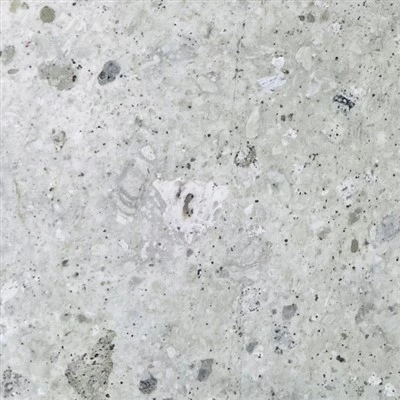
Among the many building materials, natural stone is a material that has a wide range of applications and a higher frequency of use, and is easier to reflect the landscape effect. Natural stone is an ancient building material with the characteristics of high strength, good decoration, high durability, and a wide range of sources. Granite has hard texture, good abrasion resistance, high weathering resistance and durability, good acid resistance, but not fire resistance. The service life can be as long as hundreds of years or even thousands of years. Many ancient buildings with a long history in the world are made of granite. Granite stone is widely used in construction, so what are the main points and suggestions for granite stone in construction?
1. The application of granite in environmental art mainly adopts wet installation. Attention should be paid to the improvement of construction technology and the technical level of construction personnel, and strict technical disclosure and construction skills training should be carried out for management personnel and construction personnel. For large-scale projects, you can choose to experiment in advance to check the effect and the degree of agreement, and then carry out large-scale paving.
2. Light panels should not be used in squares and roads. Some squares and roads are paved with smooth stone, mainly for the inconvenience of smooth stone to pedestrians on rainy days. Singeing stone should be used when laying on a large area, or only partial lines and ribbons should be smooth, and most of the area should still be singeing.
3. The paving stones in the park should be based on nature, and artificial carving should be used as little as possible. Stone is a non-renewable resource. The use of crushed stone for paving not only maintains its natural stupid appearance, but also saves stone and makes full use of waste scraps.
4. The granite used on the steps generally uses a 2 cm thick plate, but after several years of trampling and bumping, the granite is seriously damaged and the edges are shaped like canine teeth. Therefore, it is not appropriate to use a 2cm thick plate as a step, and at least one thicker than 3 cm should be used. In addition, the upper outer edge of the step stone cannot be made into a 90 degree angle, but should be made into an arc or chamfer to increase the impact resistance.