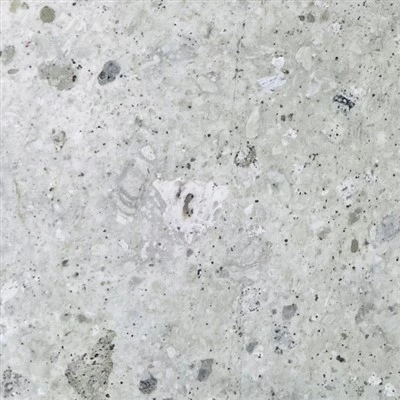
1. What is Natural Stone?
Natural stone refers to materials mined from natural rock formations and processed into blocks or slabs. The main types of natural stone used in architectural decoration are granite and marble.
2. What is Marble?
Marble refers to sedimentary or metamorphic carbonate rocks. It typically contains calcium carbonate, magnesium carbonate (white), manganese (purple), carbon or bitumen (black), dolomite (green), chromium compounds (yellow), and iron oxides (brown, purple, yellow). Various colors indicate different impurities. Pure white marble has a simpler composition.
3. Characteristics of Marble
Most marbles have two or more mixed components, with calcium carbonate as the primary constituent. They are susceptible to weathering and erosion from carbon dioxide, sulfides, and moisture in the atmosphere, which can cause a loss of luster and cracking. Therefore, only a few types, such as white marble and Ai Ye Qing, are stable and durable enough for outdoor use; most are suitable only for indoor decoration. Marble is relatively soft, so polished surfaces can wear down easily on floors. Crystal surface treatment is recommended for marble flooring.
5. What is Granite?
Natural granite is an igneous rock primarily composed of aluminum silicates. Its main chemical components are alumina and silica, with minor amounts of calcium oxide and magnesium oxide, making it an acid crystalline rock classified as a hard stone. It is suitable for kitchen countertops and flooring.
6. Characteristics of Granite
Granite is hard, resistant to acids and alkalis, corrosion, high temperatures, light, freezing, and abrasion, and is highly durable. Its appearance can maintain its luster for over a hundred years. Granite comes in a variety of colors and has a uniform and fine-grained pattern. When polished, it shines like a mirror, providing a luxurious decorative effect. Thick slabs (25mm) are recommended for kitchen countertops, as granite withstands acidic and alkaline conditions well, maintaining its beauty and strength.
7. What is Engineered Stone?
Engineered stone is an artificially synthesized decorative material. Depending on the binding agent used, it can be categorized into organic and inorganic engineered stones. Based on the production process, it can be divided into four types: polyester artificial marble, composite artificial marble, silicate artificial marble, and sintered artificial marble.
Common Stone Applications and Recommended Installation Locations
| Stone Type | Outdoor Walls | Outdoor Floors | Indoor Walls | Indoor Floors | Kitchen Floors | Kitchen Walls | Bathroom Floors | Countertops |
|---|---|---|---|---|---|---|---|---|
| Granite (Polished) | Recommended | Not recommended | Recommended | Recommended | Not recommended | Recommended | Not recommended | Recommended |
| Granite (rough) | Recommended | Recommended | Recommended | Marginal use | Normal use | Normal use | Marginal use | Marginal use |
| Marble | Not recommended | Not recommended | Recommended | Recommended | Marginal use | Marginal use | Marginal use | Marginal use |
| Sandstone | Normal use | Normal use | Recommended | Normal use | Not recommended | Marginal use | Marginal use | Marginal use |
| Slate | Recommended | Normal use | Recommended | Normal use | Normal use | Recommended | Normal use | Marginal use |
| Limestone | Not recommended | Not recommended | Recommended | Normal use | Not recommended | Marginal use | Not recommended | Marginal use |
| Jade | Not recommended | Not recommended | Recommended | Recommended | Not recommended | Normal use | Normal use | Normal use |
| Engineered Stone | Not recommended | Not recommended | Recommended | Recommended | Marginal use | Normal use | Marginal use | Normal use |
The recommendations for the use of these stones are based on their material, characteristics, deficiencies, typical installation environments, maintenance requirements, and cost-effectiveness. Variations may exist based on specific applications, design requirements, and current processing trends. Different types of stones may also exhibit significant performance and physical differences, so the application of natural stone should consider the specific properties of the stone variety used.