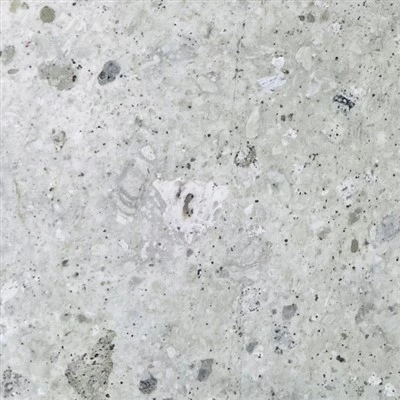
Many people prefer regular, monolithic and simple design styles. When encountering stone color difference, people are always eager to eliminate color difference, or hope to choose stone with less color difference. But in the eyes of designers, stones with chromatic aberration are actually treasures. Chromatic aberration engineering is the highest art in nature. The greater the color difference, the more precious it is. Nature is the best. Why?

There are no two identical stones in the world, and the natural color difference is exactly the charm of stones. Make good use of color difference to make the whole space bloom with a different style. Many customers think that the materials used are of poor quality, but this is actually a misunderstanding of the stone. The natural texture of marble is so beautiful, making good use of it is a work of art created by nature. Through design, stone with large texture and large color difference has become popular.
Causes of stone color difference
Stones are formed in the natural environment after at least hundreds of millions of years of complex physical and chemical changes, coupled with the evolution of geological movements. The influence of many internal and external factors will cause the ever-changing stone. This kind of change exists objectively and cannot be changed no matter how it is dealt with in the later stage, which eventually forms the color difference of the stone.
Open pit and deep mines
Stones are mined from the mine in batches, top to bottom, outside to inside. In the natural environment, the outer layer of the stone is more exposed to water, air and sunlight. Stones hidden deep inside have no such environment. Therefore, there is a general difference in color between surface and deep ores. After the deep ore is mined, the stones will also change in new environments such as sunlight, air, and water, resulting in color differences.
Uneven mineral content
The basic material of marble is calcium carbonate (limestone). In addition to the basic minerals, various elements and minerals are mixed together to create the stone's kaleidoscopic colors and textures. Taking the stones of South America as an example, the geological movement in South America is strong, and the underground is rich in copper ore, iron ore, and various metal minerals. As a result, stones from South America are often highly variable in texture and rich in color. The distribution of various minerals in nature is uneven, otherwise humans would not need to go to prospecting. This unevenness results in differences in stone color.
Different degrees of surface treatment
For the same stone, the color of the rough surface and the smooth surface are different. On smooth surfaces, the difference between polishing to 10 degrees and polishing to 50, 70, and 90 degrees is also noticeable. The brighter the stone, the more visible the pattern and color of the stone, and the brighter the rough surface will be.

Natural marble is a non-industrial product. Its texture and color need to go through hundreds of millions of years of geological movement, absorbing the essence of nature's sun and moon.
On the other hand, different terrains, environments, and grades of stone will have subtle changes in color and texture, resulting in chromatic aberration. Just like the Chinese, people in different places in Shanghai, Heilongjiang and Ningxia will still be different, but each has its own characteristics. beauty.
Pure nature, natural texture and luxurious texture are the greatest value of marble. For marble with chromatic aberration, it cannot be viewed from the perspective of "defective". Every piece of marble collected from nature is different, its color and texture are only similar, but not identical. Chromatic aberration can form colorful combinations and produce different effects.